Emergence Day
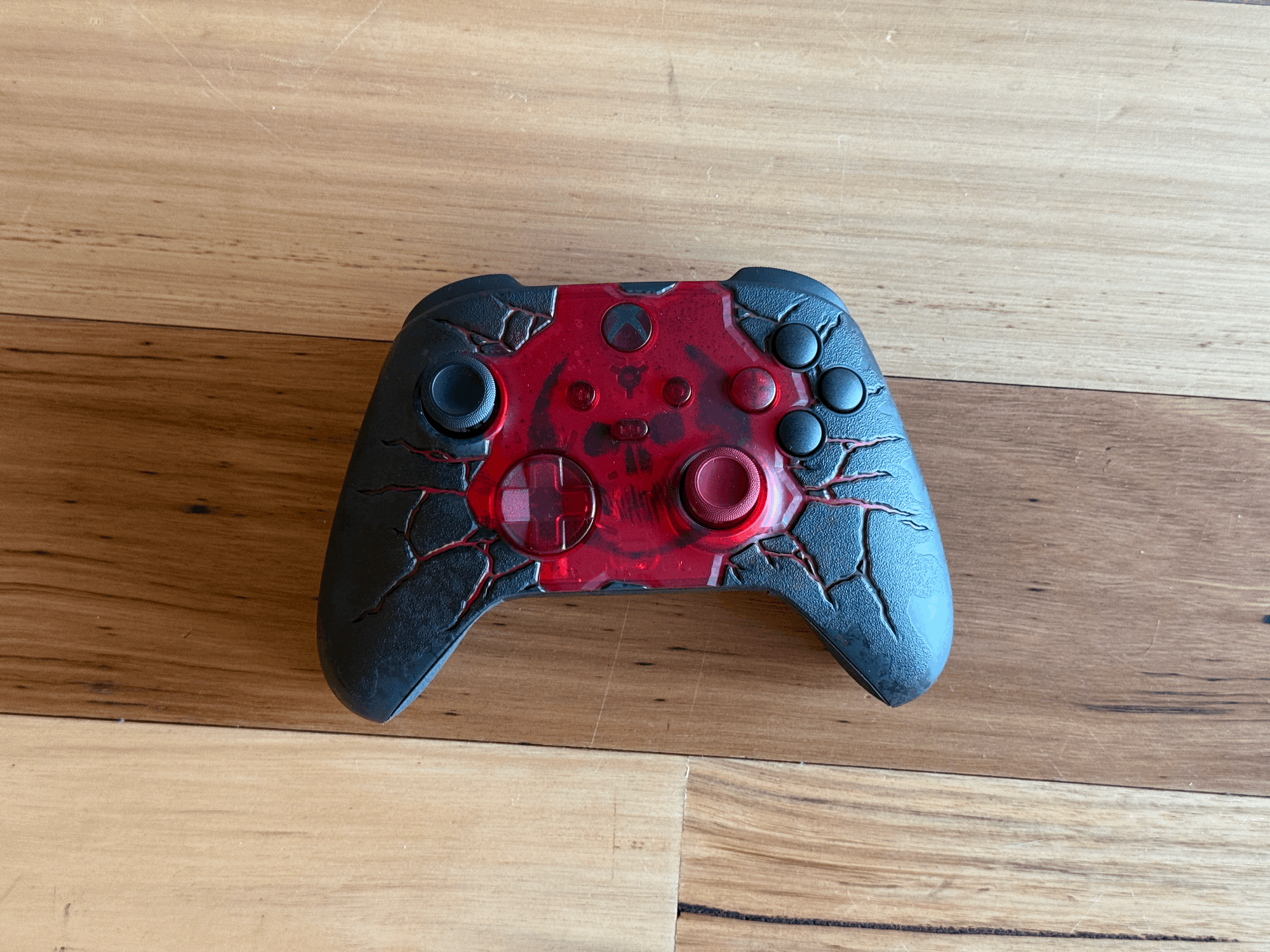
It has been around 4 months since my last post and a lot has happened between now and then. Today I want to talk about something different, that is close to my heart: a series of games that goes by the name of Gears of War.
Gears of War has been around for a relatively long time. The first title in the series was released in 2006 - when I was a teenager - to critical and commercial acclaim, and it would go on to influence many other games for years to come. More than being another game for players to enjoy, it played important roles for the companies behind it. For Microsoft, it was a reason to own an Xbox, their digital games console. For then-developer Epic Games, it was a showcase for Unreal Engine, a popular high-level primitive in games production.
The series takes place in a world invaded by subterranean monsters immediately after a conflict that spanned many decades between competing powers left the human race vulnerable. Emergence Day is the day the invasion begins.
At the time I found the first game to be harsh and alienating both online and offline for various reasons but by the time I had reached Act 5, where you board a high-speed train equipped with The Bomb That Saves The World, I had warmed to it a little. When I introduced the game to a friend and we played through it together my relationship to the series really started heating up.
We made our own fun.
In what could likely be explained by the Unreal Engine dependency and a moment in time where norms in console games were still being established, the original Gears of War made a beautiful "mistake" that would not be repeated in future entries, where it was possible to create competitive sessions in which your weapons could damage your own teammates. My friend and I managed to convince everyone else in our session through our actions alone that they should act accordingly, defying the natural objective for a bit of fun that ultimately had us laughing until we could barely breathe at 3 in the morning.
I had never seen anything like it before and I have never directly experienced anything like it since.
Years later when Gears 2 came around, my friend and I bought it on day one. At the time LAN parties - where people bring their own devices (usually desktop computers) to play games together in a community centre or similar - were somewhat commonplace and were experimenting with welcoming players of digital consoles into the fold.
For the first (and I believe only) time a Gears 2 tournament was on the program. We made our way to the event and managed to find two people on the day that were willing and able to join us to round out a full team. We had one problem. Seating at these events is on a first-come first-served basis, and unlike the other squads half of our team was physically separated from us and also each other!
It didn't stop us from making it through the first round as we were all quite adept players individually, but my friend and I were concerned by how this might go as we got closer to the top. We did what many people in their teenage years do when they're in a bind.
Hey mum, any chance you could bring down any Xbox 360 headsets you can find so that we can win a video game competition?
Our mums did their part, arriving partway through the second round of matches. Now that we could all actually speak to one another, as a team we started to click on another level, and we cleared the second match with no problem. The third and final match is where the rubber really hit the road. It came down to a tie-breaking match, and within that match there was a physical deadlock that both teams were very nervous about breaking.
Every person watching could sense that any one player from either team going down could break the whole game wide open. My friend was the only person on our team with a grenade. He had knowledge of where only 2 of 4 enemy players were positioned, and to reach his target there was no room for error. He wound up, he aimed true, and he eliminated the 2 players he had targeted, turning it into a 4 on 2 contest. Our entire team rushed the remaining two players yelling and screaming as we were, and we emerged victorious. I'll never forget it.
For me, Gears of War is much more than a video game I used to play when I was a teenager, it's an important part of how I have understood and do understand how people engage with software. Who knows, maybe the industrial surroundings of the world that the series takes place in subconsciously influenced my conceptualisation of software as a digital factory.
I've spent my fair share of time playing the latest entry in the series - which in my opinion is exceptional - and also observing the social response to it. In 2006, the year of the series debut, social responses to digital games were mediated by the games media establishment.
In 2026, the response to Gears of War E-Day is mediated, like everything else today, by social media algorithms first and foremost, where anyone can enjoy a sea of negative sentiment comprised of criticisms of varying levels of substance. This was true in the time after widespread access to the internet but before social media feeds, although part of what has changed is that the communities built around digital games have increasingly become a theatre of war for the culture for people who otherwise have "skin in the game" as well as those who do not.
Some of the criticisms speak to a general feeling that if instead of a prequel to the original game made in 2026 that this game was made before the original, perhaps in 2003, that certain creative decisions would have been evaluated differently. That much is probably true.
It should not prevent us from enjoying the good times when we are in them.