Grappling With Expectation
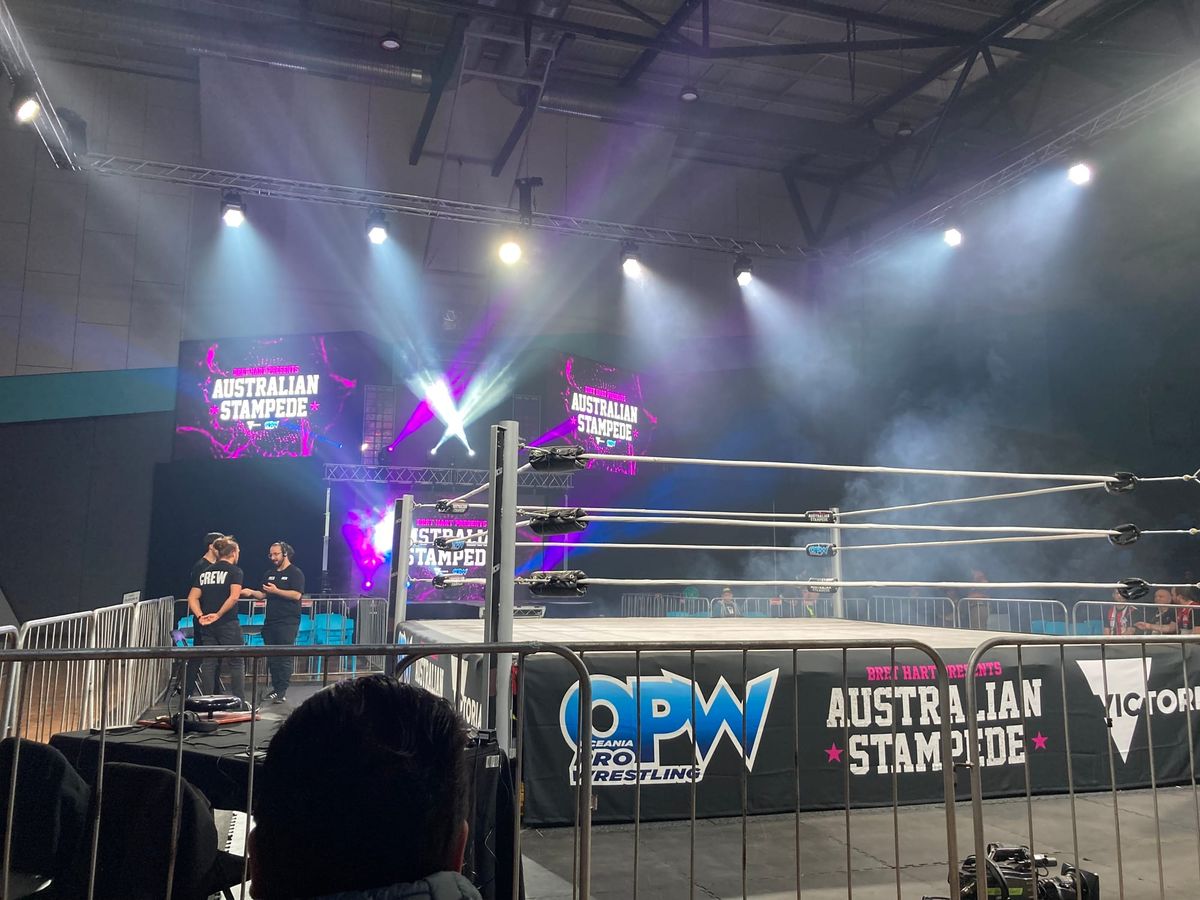
I've made one or two mentions to professional wrestling in previous posts. It's a well that I think we can draw a little more from. To understand how, recall how the general concept of the factory model is that the senses can be deceptive - digital products are not experienced directly and that what software users really interact with is a digital factory that may or may not deliver the digital product reliably.
Professional wrestling exhibits a similar pattern in the physical world. There is a carefully produced illusion - this is the product. There is also a means to produce that illusion - this is the factory. Both so happen to occupy the same physical space. The factory and the product appear to be one and the same to our senses just as they do when we experience software. Both carry with them certain handshake agreements. If one wrestler appears to punch another, we expect the other to react as though they were punched. If an app is understood to be retrieving data, we expect this to happen within a timely manner. If these implied agreements are broken, we generally notice, and it has an effect on our level of satisfaction with the experience.
In best in the world I made the argument that popular metrics do a disservice to software developers as the work is not sufficiently commoditised to reliably measure performance. In professional wrestling there is a similar disparity where win and loss records are weaponised to enhance a story. Villains (or "heels") often cheat to win, and use the truth of their victory to tell a lie about their alleged superiority, which usually draws boos from the crowd who are quite familiar with the circumstances surrounding those wins. In software there is no comparable public demonstration of who did the honest work (the "face", to use terminology from professional wrestling) - there is only the win and loss record. In software that is "does it work?" or "does it do what I expected?".
There are a couple of examples from professional wrestling that come to mind that I think are pretty effective in communicating the resulting dynamic. One happened at WWE Survivor Series 2003. At one hour and twenty-six minutes in to the event, a 5-on-5 contest took place to determine whether Stone Cold Steve Austin would be forced to retire. As the last man standing for Team Austin, Shawn Michaels would nearly overcome three of his opponents and illegal interference from another two wrestlers that were not officially involved in the match. Commentator Jim Ross would make the remark that Shawn Michaels "did everything a human being could do".
A cold reality of software delivery is that stakeholders at all levels tend to make inferences about competence based on the perceived experiences that they have, which can be based on any (or all) of the market, the business, the project and the factory.
Anyone who has a hand in delivering software could find themselves in circumstances not so different than Shawn Michaels did at Survivor Series 2003, doing everything right and falling short all the same. The cherry on top is that you do not earn the respect and admiration of an audience who witnessed your trials and tribulations. In fact, you may be booed out of the building by people who do not know about gatekeepers, growing pains, differences between devices, reconciling sources of truth, the supply chain, access rights, and how issues happen.